Secession: If It Feels Good, Do It By Richard Maidu

Well before the US invasion of Iraq, the American media was doing all within their power to stir popular support. Second only to claims of “WMDs”, the most consistent subject was the plight of Iraqi Kurds. To the average American this previously unknown people became a symbol of Saddam Hussein’s cruelty, and their suffering a grim example of the vulnerability of a people who do not have a homeland of their own.

That was over five years ago now. While the conflict wages on, the government of Saddam Hussein is nonetheless a matter of history. The United States has had the ability to create a Kurdish state, or at least to make efforts to that end. They could draw up an independent nation for an ethnicity considered “the largest people without a piece of land”. These are a people who desire and deserve one, and the existence of such a state would deter any unforeseen future ethnic oppression like that seen under Saddam.

Yet this has not been done, and will not be done. For all of the hype that surrounded these people before the invasion they have since become unmentionable on American news and forgotten by the American people. The reasons for this inaction are not complex. The creation of Kurdish state in northern Iraq would encourage Kurdish secessionists in south-eastern Turkey, thereby severely angering the U.S.’s closest allies in the region. The token gesture of creating an “autonomous region” within Iraq (not to mention the small yellow stripe on the short-lived “new Iraqi flag”) are pathetic, token gestures. In the long run they will not solve the historical differences between these peoples, as they do not take adequate measure to quench a proud people’s thirst for independence. These efforts amount to a simple postponement to what will be more troubles down the road, a tactic American foreign policy executes flawlessly.

The concept of national self-determination was raised again last Sunday when the 92% ethnic-Albanian people of Kosovo declared its independence from Serbia. This would seem like an inevitable reaction by a people torn by genocide for decades – that an ethnic group will only be dominated by another so long as they feel they have no other choice. When an opportunity presents itself, it will, and must, be taken.

This concept is understandable enough, and many nations, including most in the E.U., have thus far recognized this newest of states. Some have declined for fear of upsetting relations with Serbia, showing once more that elected officials the world over will chose political expediency over doing what is right. Another nation that has deemed the succession “illegal”, and the only one in Western Europe, is Spain.

This is no doubt due to their own troubles with the Basque separatists, and a state that has struggled so hard to contain their own secessionist movements will be less inclined to recognize others. Fascinating stuff, really, and the concept of one nation not recognizing another deserves closer examination, as does the claim that such “unilateral” declarations of independence are illegal.

By contemporary, democratic standards, a government derives its legitimacy directly from its claim of representing the people over which it rules. At the point that the people, or a part of those people, no longer wish to be a part of that state, by extension they are not. There is a potential slippery-slope to this argument, of course, and self-determination does have it’s limitations. One can not, for example, declare their suburban property an independent nation, a la Family Guy’s “Petoria”. There is little basis for such action, and it is furthermore infeasible, as the people of this new nation would invariably walk on public (and “foreign”) streets, shop at “foreign” grocery stores, etc.

Independence movements such as those seen among the Kurds in Iraq, Turkey and Iran, and the Basque in Spain and France; these have much more in common with the independence movements from which many modern nations have been born. These are realistic nation-states, as the ethnic groups they represent remain in some geographical ethnic ‘homeland’, with shared history, culture, and identity.

Consider the nations these movements would create were they successful. Now consider many independent nations in existence today. Belgium is by all accounts an accident of history. There exists a country for the richest and most arrogant of the French; it is called Monaco. There is a country for the most powerful of the Catholics; it is called Vatican City. Too small and too alike its neighbours for anyone to care, Andorra pointlessly cradles the border of Spain and France, while neither country will extend the same freedom to the people of the Basque land. These states cannot realistically boast a distinct culture or ethnicity, but they are countries which have complete autonomy. Meanwhile, ethnic groups with distinct identity going back thousands of years are relegated to being the subject of another culture’s occupation.

This may seem like too strong a word, but with popular secession movements thwarted by government intervention, “occupation” is exactly what occurs. The American revolution was no less a “unilateral” bid at independence than any other separatist movement. So too was the French Resistance in the Second World War efforts at “unilateral separation” –the Germans themselves seemed in no hurry to leave. These were examples of the ruled not considering themselves of the people who were ruling them, but had at first little recourse due to military inadequacy.

It is a nasty business both in reality and in concept. One could go so far as to consider such occupation tantamount to conquest, with every nation which attempts to control another people through force conquerors, just as a slave-holder is guilty of slavery though he did not personally do the enslaving. To prolong injustice is to commit injustice. To believe no nation has the ethical right to “unilaterally” conquer another necessitates an understanding and support of secessionist movements. Until they do, the greater claims of national representation remain unfulfilled.

We are taught to believe that a flag is a symbol of a nation, and that a nation is the collective will of the culture it represents. Flown together so presumptuously from diplomatic buildings to 4-star hotels, we’ve seen rows and rows of diverse national flags, each presumably representing a different people in this proud and advanced age where we at least attempt harmony despite our differences. With justifiable independence movements suppressed within their borders, these representation of the peoples of the world amount to a great illusion, a lie.

Which begs the question: what is a nation? I realize that the people from Norway speak Norwegian, and Han Chinese have been known to be living in China for thousands of years. But what is a “Kuwaiti”, when the nation did not exist before 1961? What does it mean when we see children waving little plastic Kuwaiti flags on TV knowing that their sense of nationhood is the product of corrupt British politicos and well-connected Arabian sheikhs?

If governments are really supposed to represent proud and distinct peoples, cultures and ethnicities, rather than just people within an arbitrary square bit of land drawn haphazardly on a map by a drunken Englishman some fifty years ago, world governments must own up to true self-determination, that all peoples have a right to pursue government policy even if that means separatism, and that separatism can be a noble and intelligent thing, even if those wishing to separate currently lay within one's own borders.

This action, though it may be supported by the people it would represent, is frequently condemned as “illegal” by international community, and almost always by the occupying state itself (the “Velvet Divorce” of Czechoslovakia in 1993 and a handful of post-colonial movements are rare exceptions). Even a prominent former colony such as India is not above the oppression of minority secessionist movements. Just over 60 years removed from its own colonial history and knowing well the bitterness of foreign domination, the Constitution of India expressly forbids states from declaring independence. Separatist political parties have been banned, and secessionist movements, such as that of the Sikh-dominated ‘Khalistan’ of Punjab have been suppressed with violence where necessary.

Now the overwhelmingly non-Serbian population of Kosovo has withdrawn from Serbia. Serbia itself is no stranger to essentially nationalist independence movements over much of this last century, lastly from the greater Yugoslavia, then from the greater Soviet bloc, from the Nazis, and originally from the Austrio-Hungarian Empire. It was a Serbian nationalist’s desire for independence that drove him to fire the shots that instigated the First World War. These governments can quite clearly understand the motivation behind secession, but choose not to.

Hypocrisy? Of course it is. Inevitable? Probably.

The reprehensible positions of national governments declaring justifiable independence movements illegal illustrates that, when they conflict, most governments will choose self-indulgent political expediency before higher ideals of what is right. The uninspiring reality is that national governments – every national government – desires power, and the more power the better. Behind every claim of “independence” and “freedom” there is the base materialist desire to be bigger and better, or at the very least not to grow smaller and weaker. They get away with this injustice because they can.

But as ever when political reality does not coincide with political justice, the argument against the status quo is always worth the effort. There is always something to be said for speaking out against it, even if you are never heard. I must presume you feel the same, or else you wouldn’t be reading this article and would never have given this magazine the slightest chance. It is this effort, if nothing else, that keeps politics from becoming just another business, and it is a people’s sense of representation that puts human meaning behind those pieces of cloth at the top of poles.

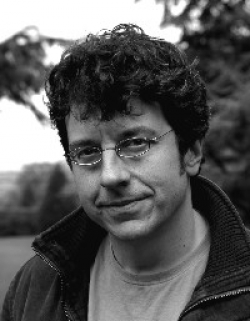
An Exchange of Souls By George Monbiot

This is a column about how good intentions can run amok. It tells the story of how an honourable, intelligent man set out to avert environmental disaster and ended up accidentally promoting the economics of the slave trade. It shows how human lives can be priced and exchanged for goods and services.

The story begins in a village a few miles to the west of London. The British government proposes to flatten Sipson in order to build a third runway for Heathrow airport. The public consultation is about to end, but no one doubts that the government has made up its mind.

Its central case is that the economic benefits of building a third runway outweigh the economic costs. The extra capacity, the government says, will deliver a net benefit to the UK economy of £5bn. The climate change the runway will cause costs £4.8bn, but this is dwarfed by the profits to be made.

There is plenty of evidence suggesting that the government’s numbers are wrong. A new analysis by the environmental consultancy CE Delft shows that the official figures overestimate both the number of jobs the runway will generate and the value brought to the United Kingdom by extra business passengers. In an excoriating article in the Guardian last week, Professor Paul Ekins demonstrated that the government has rigged the cost of carbon. (Delightfully, the web address for the consultation document ends completecondoc.pdf.) But while the runway’s opponents don’t like the results, most people seem to agree that weighing up economic costs and benefits is a sensible method of making this decision. The problem, they argue, is that the wrong figures have been used.

When Sir Nicholas Stern published his study of the economics of climate change, environmentalists (myself included) lined up to applaud him: he had given us the answer we wanted. He showed that stopping runaway climate change would cost less than failing to prevent it. But because his report was so long, few people bothered to find out how he had achieved this result. It took me a while, but by the time I reached the end I was horrified.

On one side of Stern’s equation are the costs of investing in new technologies (or not investing in old ones) to prevent greenhouse gas emissions from rising above a certain level. These can reasonably be priced in pounds or dollars. On the other side are the costs of climate change. Some of them - such as higher food prices and the expense of building sea walls - are financial, but most take the form of costs which are generally seen as incalculable: the destruction of ecosystems and human communities; the displacement of people from their homes; disease and death. All these costs are thrown together by Sir Nicholas with a formula he calls “equivalent to a reduction in consumption”, to which he then attaches a price.

Stern explains that this “consumption” involves not just the consumption of goods we might buy from the supermarket, but also of “education, health and the environment.”He admits that this formula “raises profound difficulties”, especially the “challenge of expressing health (including mortality) and environmental quality in terms of income”. But he uses it anyway, and discovers that the global disaster which would be unleashed by a 5-6° rise in temperature, and which is likely to involve widespread famine, is “equivalent to a reduction in consumption” of 5-20%.

It is true that as people begin to starve they will consume less. When they die they cease to consume altogether. But Stern’s unit (a reduction in consumption) incorporates everything from the price of baked beans to the pain of bereavement. He then translates it into a “social cost of carbon”, measured in dollars. He has, in other words, put a price on human life. Worse still, he has ensured that this price is buried among the other prices: when you read that the “social cost of carbon” is $30 a tonne, you don’t know - unless you unpick the whole report and its methodology and sources - how much of this is made of human lives.

The poorer people are, the cheaper their lives become. “For example,” Stern observes, “a very poor person may not be ‘willing-to-pay’ very much money to insure her life, whereas a rich person may be prepared to pay a very large sum. Can it be right to conclude that a poor person’s life or health is therefore less valuable?” Up to a point, yes: income, he says, should be one of the measures used to determine the social cost of carbon. Sir Nicholas was by no means the first to use such a formula. What was new was the unthinking enthusiasm with which his approach was greeted.

Stern’s methodology has a disastrous consequence, unintended but surely obvious. His report shows that the dollar losses of failing to prevent a high degree of global warming outweigh the dollar savings arising from not taking action. It therefore makes economic sense to try to stop runaway climate change. But what if the result had been different? What if he had discovered that the profits to be made from burning more fossil fuels exceeded the social cost of carbon? We would then find that it makes economic sense to kill people.

This is what the government has done. Its consultation paper boasts that “our approach is entirely consistent with the Stern Review”. It has translated his “social cost of carbon” into a “shadow price of carbon”, which is currently valued, human lives and all, at £25 a tonne.

Against this is set the economic benefit of a new runway. Part of this benefit takes the form of shorter waiting times for passengers. The government claims that building a third runway will reduce delays, on average, by three minutes. This saving is costed at €38-49 per passenger per hour. The price is a function of the average net wages of travellers: the more you earn, the more the delays are deemed to cost you, even if you are on holiday.

Consider the implications. On one side of the equation human life is being costed. On the other side, the value of delays to passengers is being priced, and it rises according to their wealth. Convenience is weighed against human life. The richer you are, the more lives your time is worth.

The people most likely to be killed by climate change do not live in this country. Most of them live in Africa and South Asia. Hardly any of the economic benefits of expanding Heathrow accrue to them. Yet the government has calculated the economic benefits to the United Kingdom, weighed them against the global costs of climate change and discovered that sacrificing foreigners - especially poor ones - is a sensible economic decision.

I can accept that a unit of measurement which allows us to compare the human costs of different spending decisions is a useful tool. What I cannot accept is that it should be scrambled up with the price of eggs and prefixed with a dollar sign. Human life is not a commodity. It cannot be traded against profits or exchanged for convenience. We have no right to decide that others should die to make us richer.


This article first appeared in the Guardian newspaper on 19th February 2008. The article with full footnotes also appears on [Monbiot.com]

New Versus Old Right In Paraguay's Presidential Election By Ben Dangl

Now that much of Latin America has shifted to the left, Paraguay remains a key Washington ally. The country’s political landscape continues to be dominated by the Colorado Party, which has been in power for 61 years, the longest continuous rule of any political party in the world. This enormous political machine, much of it built and consolidated during the 35-year military dictatorship (1954–89) of General Alfredo Stroessner, still permeates every inch of Paraguayan society. Yet as the panorama of candidates for the April presidential election makes clear, a new right-wing faction is emerging within the party, pledging to cut the umbilical cord with the past.

The two main contenders for the Colorado Party’s nomination best represent this new Paraguayan right: Blanca Ovelar, a former minister of education, and Luis Castiglioni, who renounced his post as vice president in October in order to run. While both followed in the so-called anti-corruption footsteps of outgoing president Nicanor Duarte Frutos, the very fact that they represented the Colorado Party signaled that they will not challenge the status quo—that is, the monolithic clientelist state apparatus that the party embodies. While adhering to conservative Colorado policies, Ovelar attacked corruption, promising "systematic, rigorous, and professional" fiscal control. But she also used new populist rhetoric. "My fight and my government have and will have a clear objective, a well-identified enemy: poverty," she declared on her blog. (More than half of the Paraguayan population lives under the poverty line.)

Castiglioni, on the other hand, is a close Washington ally and promoter of neoliberal policies. Washington has cultivated close ties with him, especially on trade. On a trip to the United States in 2005, Castiglioni was photographed in chummy meetings with Roger Noriega, Dick Cheney, Donald Rumsfeld, and the director of the FBI. He represents new interests that have arisen since the end of the Stroessner era, particularly soy growers and cattle ranchers, as well as the transnational agribusinesses allied with them. But besides insulting Ovelar, Castiglioni’s campaign speeches have been limited to anti-corruption rhetoric, particularly with regard to the disappearance of $50 million from the social project fund of the binational Hydroelectric Itaipú Company, for which he blames the Paraguayan director Víctor Bernal and Duarte.

Castiglioni’s advocacy of corporate control over public services and deregulating the economy clashes with the old right’s vast system of clientelism, in which public jobs are offered in return for political support. (Upon his election in 2003, Duarte, a Colorado stalwart, declared, "Neoliberalism has been a failure because it denies human dignity.") This system relies entirely on state programs and services; unlike in other Latin American countries where neoliberalism has flourished, many Paraguayan roads, water systems, and electric utilities remain under state control. One of citizens’ few prospects for employment is through the Colorado Party, which employs some 200,000 people, 95% of whom are party members, in various capacities, from construction to teaching to local politics. Though many view the party as corrupt and ineffective, supporting it often means receiving a salary.

On December 16th, 2007 these two contenders entered their party’s primary. Blanca Ovelar won the vote with 45.05 percent compared to Castiglione’s 44.5 percent. For his part, Castiglioni says that 30,000 votes that were cast for him were stolen, and has since threatened to go to court to challenge the nomination. If Ovelar is elected, she’ll be the country’s first female president, but she’ll continue the legacy of the Colorado party. Lucy Benitez, a leather goods saleswoman in an Asunsción plaza, told AP, "I don't care whether there's a woman or man, but the next president must not be a Colorado."

The candidates representing the old statist right included Duarte—whose success seems unlikely, given that the Constitution will have to be changed to allow him to seek a second term—and is now narrowed down to General Lino Oviedo, running under his National Union of Ethical Citizens Party. Oviedo was banned from the election for participating in a foiled 1996 military coup, until the Supreme Court pardoned him in October. Capitalizing on his "martyr" status earned during a jail stint for participating in the coup, he promotes "a judicial guarantee of public order." He also promises a new constitution and to restructure the state government but fails to offer any details on how he would go about this.

Relations with Washington, which has lavished Paraguay with democratization projects (that is, military training) in recent years, figure heavily as a campaign issue. Though the two countries have long been close, tensions arose even during the Stroessner era over the dictator’s not so subtle drug business. A 1986 House of Representatives report declared that there was "evidence of military collaboration and even active participation in the operation of cocaine laboratories," and in 1988, the U.S.-based Cox Newspapers reported that Stroessner was collecting payoffs from "all narcotics traffickers conducting business in Paraguay." Stroessner himself came to be called King of the Smugglers.

Today, Washington touts the fact that "more than a dozen U.S. multinational firms," mostly in the computer, agro-industrial, telecom, and banking industries, have subsidiaries in the country. But it has also identified Paraguay as a "major illicit producer of cannabis" and "locus of money laundering, smuggling, arms and illegal narcotics trafficking, and fundraising for extremist organizations." These concerns center on one of the country’s most notorious cities, Ciudad del Este. Initially named Port Stroessner after the dictator founded it in 1957, the city exists in the tri-border region where Paraguay, Brazil, and Argentina meet. In 1996, Forbes magazine ranked the city as the third most important commercial center, after Miami and Hong Kong—a crucial node in the trade circuits through which legitimate and counterfeit goods alike find their way to port.

Thus the old right has more links to narco-traffickers and the lumpen business class, both of which depend on international trade and black market goods, whereas these illicit flows are a thorn in the side of the new right and the multinational corporations whose products are undersold by counterfeits. Washington continues to work with military and legislative sectors on projects ranging from "medical missions" among the radicalized anti-soy farming community, to military training for pro-soy law enforcement, to anti-piracy and anti-narco-trafficking projects on the sievelike border. Yet it will be very difficult, if not impossible, to enforce legislation against the mafia and narco-traffickers given the connections they have to high-ranking members of the police, military, and judiciary.

In contrast to the other candidates, Fernando Lugo, the bearded former bishop running for president, represents a link to the new left in Latin America. Yet his base comprises a wide coalition of opposition forces whose interests probably don’t coincide past a rejection of Colorado rule. And his candidacy is uncertain, since the Vatican has rejected his requests for laicization, and Paraguayan law forbids clergy from running for office. Nonetheless, Lugo, together with Oviedo, is considered a front-runner.

In any case, if Paraguayan voters think ousting the Colorados is enough to create change, warns Paraguayan sociologist and human rights advocate Marco Castillo, they are in for a surprise. "The Colorados are organized and capable, and could mobilize their wide support and state-based infrastructure to make any advances by the new government impossible," he says. But he adds that if the Colorado Party does win the elections, a continuation of its clientelist, pro-business policies for the next five years could be "disastrous."


This article first appeared on Upsidedown World. Benjamin Dangl is the author of "The Price of Fire: Resource Wars and Social Movements in Bolivia", (AK Press, 2007). Email: Bendangl(at)gmail.com

This Week in the Media: Government Private Sector Bailouts, and the Furore Over Sharia By David Floyd

It's a bad thing when government-funded youth projects are not run as well as they could be and a worse thing when chunks of cash apparently go missing.

For that reason, while there's no evidence that he's been personally responsible for what's gone wrong, even many Ken Livingstone supporters will have been frustrated by the recent problems at the London Development Agency.

But, if you've been reading the "mainstream" media over recent weeks, you could be forgiven for thinking that well-intentioned but poorly run multithousand-pound youth projects are a bigger issue than the taxpayer bailout of multibillon-pound private-sector disasters.

Hot on the heels of Northern Rock, which wasn't completely Gordon Brown's fault, comes the collapse of Metronet, that unequivocally was.

Many readers may remember the period before and after Livingstone became mayor of London when he unsuccessfully battled the Treasury to avoid the implementation of a farcical public-private partnership to revamp the capital's Tube network.

Metronet, the company which was meant to be carrying out around two-thirds of this work, went into administration last July and, last week, the government paid off its £1.7 billion worth of outstanding debts, clearing the way for Transport for London to take its maintenance contracts back in house.

Cynics may suggest that a key factor in Metronet's inability to do the job on budget may have been that it was a consortium made up of the companies responsible for delivering the work that it was carrying out.

Generally, one of the key issues for comrades who favour the marketisation of public services is the need to tackle entrenched "producer interests."

I'm a big fan of most public-sector workers, but I wouldn't advocate giving them a 30-year contract and then letting them choose how much to pay themselves.

If you replace public-sector workers with shareholders of private companies whose aim is to extract the maximum return for their company in the shortest possible time, this doesn't sound like a perfect recipe for success. It wasn't.

Brown pushed through this monstrosity for purely ideological reasons despite the fact that, even if it had worked, it was bound to end up being a worse deal for the taxpayer than public ownership or even real privatisation.

Why is this a smaller story in London than some allegedly mismanaged youth projects?

Maybe it's because it's OK for white people to waste loads of taxpayers' money, but, more likely, it's because no-one in "mainstream" politics or their media allies can bring themselves to admit that attempting to create markets where they don't exist is as inefficient as it is stupid.

I don't believe in God, but I'm a big fan of the Christian socialist Archbishop of Canterbury Rowan Williams.

In fact, in recent years, the leadership of the Church of England - the Archbishop of York John Sentamu is progressive on many issues too - has been considerably closer to the centre-left of British politics than the leadership of new Labour.

Unfortunately, the fact that Williams is a good guy does not alter the fact that his suggestion that sharia law could be incorporated into British law is a bad idea.

A broadly sympathetic piece by Riazat Butt in Saturday's Guardian rightly explains that his bishopness was clearly not advocating flogging on the streets of Bradford.

What he probably was advocating - much like political "kite flying," theologising is often short on specifics - was giving devout Muslims the right to refer to sharia courts in what the Butt calls "matters of divorce, inheritance, commerce and marriage."

The info box attached to Butt's article highlighted some problems with that, not least that, when it comes to divorce, "men have the right of unilateral divorce. A divorce is effective when the man tells his wife he is divorcing her."

On the other hand, "a woman wanting divorce usually needs the consent of her husband. But most schools allow her to get a divorce without her husband's consent if he is impotent."

There are already informal sharia courts in Britain making judgements on this basis and, assuming that all parties involved are consenting adults, the British state has neither the duty nor the ability to do anything other than let the participants get on with it.

But the idea that parts of sharia promoting gender discrimination should be rubber-stamped and given legitimacy by a government committed to universal human rights is deeply troubling.

You don't have to believe that sharia law is fundamentally wrong to believe that its discriminatory aspects have no official place in the modern secular democracy that we're hopefully trying to create.

Venezuelan Health Spending Among Highest in the Americas By Kiraz Janicke

"Venezuela is one of the countries that has the highest investment in health in the American continent," Venezuelan President Hugo Chavez said on Tuesday during the inauguration of the new Dr. Osío de Cúa Hospital in Miranda.

As he toured the installations of the new hospital, accompanied by Health Minister, Jesús Mantilla, governor of Miranda, Diosdado Cabello as well as members of the local health committee, Chavez outlined some of the key achievements in the health sector during his government via a national television broadcast.

Importantly, the percentage of GDP invested in the health sector had increased from 2.8 % in 1997 to 6% in 2007, making Venezuela one of the leading countries in health spending across the continent, Chavez emphasized.

This increased health spending has resulted in an increased number of doctors per 100 000 inhabitants from 20 in 1997 to 59.3 in 2007, Chavez said.

In the same period, the number of primary health care clinics in Venezuela also increased from 4804 to 11 373, and the number of consultations through the National Health System increased from 3.5 million in 1997 to 54 million in 2007, he added.

Significantly, the percentage of citizen access to primary health care has increased dramatically from 21.5% in 1997 to 95% in 2007.

In addition the infant mortality rate in Venezuela dropped from 23.4% in 1997 to 13.4% in 2007 Chavez pointed out. The percentage of underweight babies born, also diminished over the same period from 10% to 8.7%.

The construction of the new hospital, with an investment of 34 million Bs.F (US$15.8 million), was one of the most important achievements of the government in the health sector, the president stressed.

The hospital which s expected to attend to 135 000 people per month and cater for 200 communities, will provide emergency services, intensive care, maternity wards, a radiology center, medical laboratories as well as a center for 170 students of General Integral Community Medicine.

The Program for General Integral Community Medicine is aimed at actively promoting healthcare in the communities, with a special emphasis on training up doctors with a high level of social commitment to work in the poorer areas.

Naiby Araujo, a medicine student who will study in the new center, said the opening of the hospital would result in social and economic improvements in the surrounding area and decongest other health centers.

The hospital is also equipped with a center for trauma counseling, observation and recuperation centers as well as urology, gynecology, family planning and general medicine clinics.

Sonia Ramírez, a local resident told VTV that the hospital would "help the community a lot, because now we will be much closer to healthcare services."

Together with the Dr. Osío de Cúa Hospital Chavez also simultaneously inaugurated, via video link up, some 288 new health clinics and 14 new Integral Diagnostic Centers, as part of the government health program Mission Barrio Adentro I, (aimed at providing free universal primary healthcare), as well as a new High Technology Center and 11 new Centers of Integral Rehabilitation, as part of Mission Barrio Adentro II, (which aims to provide free specialized care).

With the inauguration of these new health installations around the country, the total number of medical installations constructed by the Bolivarian government is 917, Chavez declared.

The government would also continue to push forward with its plan to restructure, modernize and extend Venezuela's existing hospital system, through the Barrio Adentro III, program, as well as the creation of 16 new specialized hospitals in the framework of Barrio Adentro IV, Chavez explained.
Chavez announced that these new specialized hospitals would include; a National Cancer Center in Guarenas, a pnuemonia and neurosurgery centre in Baruta, a cardiology center in Montalbán, Caracas, a toxicology and oncological center in Barainas, a maternity and children's hopsital in San Fernando (Apure), a traumatology centre in Carabobo, the Solidarity Hospital of the South, in Guri (Bolivar), and a national center for drug and alcohol rehabilitation in Aragua.

Kiraz Janicke writes for Venezuela Analysis.

Working the "Graveyard Shift" (U.S.) By Josh Lucker

“Wherever there is a working day without restriction as to length, wherever there is night-work and unrestricted waste of human life, there the slightest obstacle presented by the nature of the work to a change for the better is soon looked upon as an everlasting barrier erected by Nature.”
- Karl Marx, Capital Volume I

As if graveyard and shift workers needed a new reason to despise their jobs, which place their schedules in opposition to the waking world, the International Agency for Research on Cancer, part of the World Health Organization, has recently declared night work a “probable carcinogen,” with the American Cancer Society likely to follow suit. A report by the Associated Press states that research clearly shows “higher rates of breast and prostate cancer among women and men whose work day starts after dark.” This is due to the fact that melatonin, which is integral to the body’s functioning, is usually produced at night, while the body rests. Melatonin production is inhibited by the artificial lighting, putting night-shift workers at risk.

And what do shift workers get for their trouble? The Fair Labor Standards Act does not even require that they receive extra pay for having their schedules turned upside down. In the advanced capitalist economies, nearly 20 percent of workers are forced to work the night shift, with younger workers working more than older, blacks working more than whites, and perhaps most disturbing of all, single mothers more than married mothers. In all, 15.5 million people in the U.S. are formally engaged in some form of night labor.

Night labor has been part of capitalism for quite some time, and generally speaking, “to appropriate labor during all the 24 hours of the day” has been an “inherent tendency of capitalist production,” as the need to squeeze every last bit of surplus value out of the production process forces the capitalist class to resort to ever more dehumanizing methods of production (Marx, Capital Vol. I). Marx remarks in a footnote to Capital that the very fact that there is any “controversy” on the question of night labor “shows plainly how capitalist production acts on the brain-functions of capitalists and their retainers.”

Night labor has long been seen as a measure of the level of “development” of a capitalist economy. In more developed countries more workers work night shifts, or what Marx refers to as a “relay system,” i.e. a rotating system of day-night shifts. The relay system allows the boss to maintain production for the entire 24 hours of the day, but it is extremely dangerous for a worker’s health, as it results in sleep deprivation by upsetting his or her circadian rhythm, i.e., constantly forcing a resetting of the body’s internal clock.

According to a report produced by the National Institute for Occupational Safety and Health, aside from disrupted melatonin production and sleep deprivation, “shiftworkers have more upset stomachs, constipation, and stomach ulcers than day workers.” The specific cause of these particular digestive problems is still up in the air. It could be another product of the disruption of the circadian rhythm, but it could also have a dietary cause, as often workers on the night shift are limited in their choices to vending machine junk food. A Swedish study has also found possible links between night work and heart disease, perhaps caused by work schedule stress.

It would be remiss to not mention the family and social bond disruptions caused by working at night. Night workers with children face a particularly rough dilemma. They can either participate in the lives of their children, forced to live dual lives perpetually deprived of a healthy amount of sleep, as the schedules of their children are inverted from their own, or they can try to find affordable, quality childcare, which is something they are not likely to find under the current system.

For these and other reasons, the labor movement has always been at the forefront of arguing for the complete abolition of night labor. During the Paris Commune of 1871, when the workers of Paris succeeded in overthrowing the capitalist government and organized the first embryo of a workers’ state, they felt it important enough to place a ban upon night labor in the bakeries. Leo Frankel, one of the participants in the Commune, stated that, “The class of bakery workers is the most unfortunate section of the proletariat; indeed, you will not find a more underprivileged trade. Every day we are told that the workers should educate themselves, but how can you educate yourself when you work at night?” (our emphasis) He was to declare the decree against unnecessary night labor “the only truly socialist decree passed by the Commune.”

The Bolsheviks considered the prohibition of night work to be of the utmost importance. In the heat of revolution, in June of 1917, they revised the party program to abolish night work between 8 pm to 6 am, extending the ban one hour further, while at the same time adding a provision stating that were night labor to be absolutely necessary for technical reasons, it should under no circumstances exceed four hours.

Based on infinitely more developed means of production than existed in tsarist Russia, a 21st Century Socialist USA, with a democratically planned economy could go even further in eliminating night work. But this will require that control of the means of production and of the state be in the hands of the working class. In the meantime, we must call for an end to night work. Workers should not be forced to place themselves at the risk of disease and disruption of their social lives for the profits of the bosses!

This article appeared on Socialist Appeal.

Anti-Deportation Campaign Gathers Speed By Sara Hall

Last week I wrote about the fate of Guy Njike, who was due to be deported back to Cameroon last Saturday to face possible imprisonment and torture. The good news: Guy is still in the UK. The bad news: he is still in great danger.

Less than 24 hours before his scheduled deportation on Saturday, an application for a judicial review was submitted and the deportation order temporarily cancelled. Jeremy Corbyn, MP for Islington North had also raised Guy's case with the Home office. Speaking to the Islington Tribune Jeremy Corbyn said: “I’m very impressed with the character and achievements of this man. He has been of great assistance to other students in his college. I’m impressed with the support he has received from teachers and students all over the country.”

In Birmingham, Guy's friends gathered with placards outside Redditch town hall on Saturday morning waiting for the Home Secretary, Jacqui Smith, to arrive at her constituency office. After the protest they were invited to speak to her in person. Smith was already aware of Guy's case as she had received many letters on his behalf the previous day. Anna Orrnert, one of Guys friends at the protest, said: “I hope Jacqui Smith will listen to the concerns of the people of Birmingham and beyond and let Guy stay here with us. We’re really afraid for him because he is in danger of being imprisoned as soon as he arrives and he is likely to be tortured again.”

On Tuesday I made my way down to Parliament and handed over the petition to stop the deportation of Guy directly to Liam Byrne, Minister of State for Borders and Immigration. I approached him in the corridor just before he was due to appear before the Joint Committee on Human Rights and asked him not to deport Guy. The petition has been signed by nearly 1,500 people, including Lord Joffe, who used to be Nelson Mandela’s lawyer.

Student and alumni of Guys’ old college, the Institute of Commonwealth Studies, have reacted with outrage to the news that Guy is soon to be deported. Yesterday they staged a protest in front of the institute dressed as judges and immigration officials. They held up a big scoreboard indicating that the UK asylum system has failed Guy on all accounts.

The support for Guy and the campaign to save him has been overwhelming. Guy said: “The one thing which gave me strength in detention was to think about all your support and all what you are doing for me.” His friends, colleagues and many supporters have vowed to continue the fight to stop his deportation. Guy’s friend Georgia Dent said: “The UK asylum system has clearly failed Guy Njike. We will do everything we can to get the outrageous decision to deport him overturned. We hope that even more people will show their support and tell the government to stop this travesty and let Guy stay in the UK with us. “

If you want to help us stop Guy's deportation please sign the petition:
[iPetition Petition Page]